Diagnostics (tools and technologies)
Diagnostics are crucial for the early detection and management of animal diseases, guiding effective interventions to protect animal health.
STAR IDAZ Approach
Diagnostics play a vital role in the early detection, monitoring, and management of animal diseases, enabling timely and effective interventions to safeguard animal health. In the context of STAR IDAZ, diagnostics are recognised as a priority area due to their critical importance in disease control and prevention.
Information
-
WOAH - Diagnostics
WOAH provides a comprehensive manual on diagnostic tests for various animal diseases, including protocols, methodologies, and applications in disease control. The manual includes detailed factsheets on different diagnostic tools and their use in veterinary medicine.
- Diagnostic gap analysis in animal health through combining public databases (Elhachimi et al, 2026)
- Whole genome sequencing in animal health: applications, challenges, and future directions (Charlier et al, 2026)
Working group
No Working Group
STAR IDAZ does not currently have an active Diagnostics Working Group. However, diagnostics are a central focus in its research planning via a dedicated research roadmap on diagnostic test development. This roadmap is applied in several disease-specific roadmaps, including those for African swine fever, foot-and-mouth disease, helminths and bovine tuberculosis. The experts involved in these disease-specific diagnostics contribute on an ad-hoc basis to the diagnostics activities within STAR IDAZ IRC.

Key People

No Active Working Group,
N/A Global
Featured

EU Aquaculture Assistance Mechanism
The EU financially supports the aquaculture sector with a wide range of funding programmes, mainly implemented through…
Reports
Reports and outcomes from meetings and workshops
Research roadmaps and gap analyses
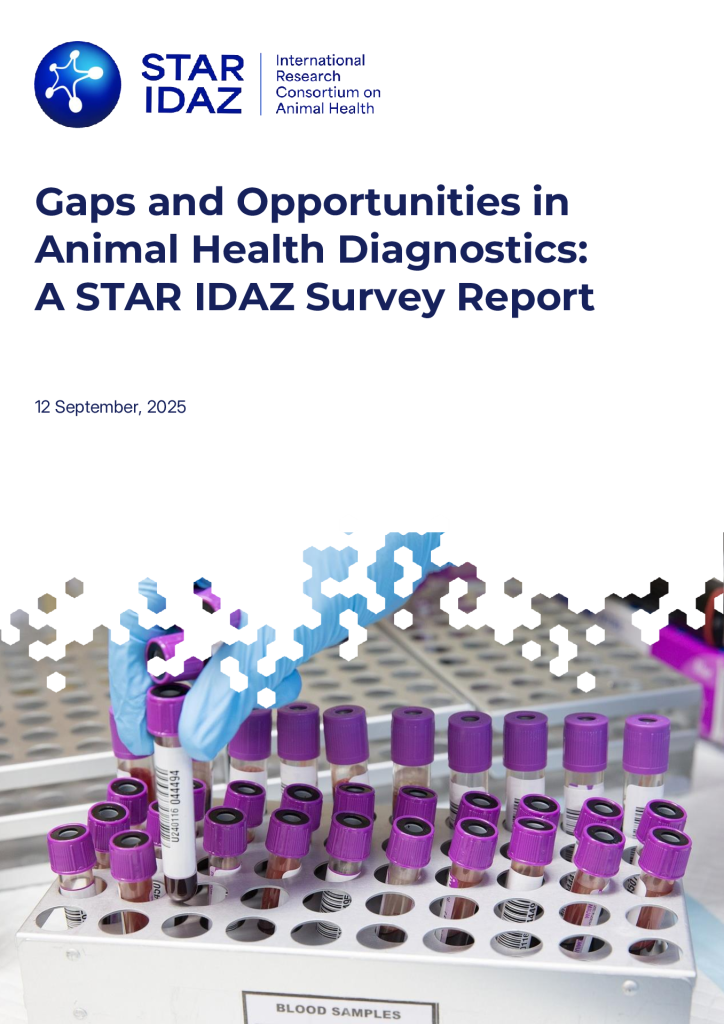
Gap analysis summary
Diagnostics are a critical priority for STAR IDAZ, supporting the early detection, monitoring and control of animal diseases. Accurate and fit-for-purpose diagnostic tools are essential for effective surveillance, disease management and informed decision-making across multiple priority diseases.
To guide future research and innovation, STAR IDAZ has developed a dedicated Diagnostic Test Development Roadmap, which identifies key research challenges and opportunities across areas such as test validation, technology optimisation, biomarker discovery, host-pathogen interactions, organism detection, and sample handling and preparation. The roadmap complements disease-specific research roadmaps and helps inform international research priorities and funding strategies. Reports and gap analyses developed through STAR IDAZ activities continue to support the identification of research needs and opportunities for collaboration.
Projects
Displaying 4 of 23 projects
VIEW ALL PROJECTSVaccines, diagnosis and epidemiology for control and prevention of African swine fever (SE1520)
Planned Completion date 31/12/2028
UK
BIO-Direct: Biomarkers and Bioassays for Veterinary Research and Diagnostics
Planned Completion date 31/12/2023
 United Kingdom
A Multi-Laboratory Comparison of Methods for Detection and Quantification of African Swine Fever Virus
Planned Completion date 07/03/2022
 Netherlands
Improved control of priority animal diseases: Novel vaccines and companion diagnostic tests for African horse sickness, peste des petits ruminants and foot-and-mouth disease
Planned Completion date 31/12/2025
 Europe
Recent publications
Reports and outcomes from meetings and workshops

Multimodal animal health monitoring in extensive livestock production systems
The evolution and applications of molecular diagnostics in veterinary and clinical medicine: from traditional methods to emerging technologies
One Health Diagnostic Strategies For Bovine TB: Conventional Platforms To Cutting-Edge Technologies
Advances in rapid microbiological testing for animal diseases: A review